I needn't have worried, however. My presentation went smoothly, the PAC members were extremely impressed with PCV activities around the country, and Peace Corps staff were happy with how I portrayed our work. In fact, they were so pleased with it that they sent my presentation back to Peace Corps Headquarters in Washington DC to show the type and quality of activities going on at our post! It was a proud day for me. I was proud of myself for a successful presentation in the face of these bigwigs and proud of my colleagues and friends for all of the great things they are doing. It was an honor and a privilege to share their work with PAC.

Showing posts with label Insights. Show all posts
Showing posts with label Insights. Show all posts
Friday, January 31, 2014
Another PAC Meeting
The quarterly meeting for Peace Corps Botswana's Project Advisory Committee (PAC) Meeting was held yesterday. Leaders from the Government Ministries, the National AIDS Coordinating Agency (NACA), Peace Corps staff, and other relevant stakeholders came together to discuss our post's program and build on previous meetings. This meeting is invaluable for sharing information and improve both relations with these parties and the quality of our service to the country. Simply being a representative is an honor. This meeting, however, my Country Director asked me to step up and present to the group.
My task was to present examples and best practices of volunteer activities across the different sectors (Local Government Capacity Building, Community Health Team, Non-Governmental Organizations, and Life Skills). This meant scanning the work done by 134 PCVs and isolating projects that would be of interest, both because of their direct relevance to the PAC members and to demonstrate alternative types of projects volunteers participate in that have a significant impact on their communities. (I have to state that this was no easy task because PCVs in Botswana are doing some very good work!) I then created a presentation to accompany my discussion and prepared for what I assumed would include an onslaught of questions by the PAC members. This was going to be a very big meeting for me - presenting and honoring the work of my fellow volunteers to such high level officials within Botswana. If I'm being honest, this means I fretted about it.
I needn't have worried, however. My presentation went smoothly, the PAC members were extremely impressed with PCV activities around the country, and Peace Corps staff were happy with how I portrayed our work. In fact, they were so pleased with it that they sent my presentation back to Peace Corps Headquarters in Washington DC to show the type and quality of activities going on at our post! It was a proud day for me. I was proud of myself for a successful presentation in the face of these bigwigs and proud of my colleagues and friends for all of the great things they are doing. It was an honor and a privilege to share their work with PAC.
I needn't have worried, however. My presentation went smoothly, the PAC members were extremely impressed with PCV activities around the country, and Peace Corps staff were happy with how I portrayed our work. In fact, they were so pleased with it that they sent my presentation back to Peace Corps Headquarters in Washington DC to show the type and quality of activities going on at our post! It was a proud day for me. I was proud of myself for a successful presentation in the face of these bigwigs and proud of my colleagues and friends for all of the great things they are doing. It was an honor and a privilege to share their work with PAC.

Monday, January 27, 2014
Dan Pallotta: The Way We Think About Charity Is Dead Wrong
Those of us working in the non-profit or development sectors will shake their heads in agreement or maybe tear up a few times at this TED Talk. My hope for it is that more people take the time to watch it and internalize what Mr. Pallotta is saying and then start a conversation that will help spread the message. We can be the generation that makes real and lasting change but it has to start with a perpective shift. Give it a shot. It will be a worthwhile nineteen minutes in your day.
Wednesday, December 11, 2013
Homesickness
I don't often express feelings of homesickness. Perhaps this is because I have felt so blessed to be in Botswana and to be doing the work I am able to do here so it seemed petty to talk about being homesick. After all, I signed up for this, I even extended my contract to stay, so any longing for home is of my own making. But today I feel like sharing that homesickness does not evade me, even if I rarely mention it.
So why am I choosing to talk about it now? In part for future Peace Corps Volunteers so they know it is normal to feel homesick. Even if you love your life, as I do, there will be days when you miss home and that is okay. In part for posterity. This blog is a documentary of my experience in Botswana and homesickness is part of that tale. And, finally, in part to explain a few things that I have been mulling over these passed months...
During Pre-Service Training (PST), we tell trainees that it's important to live firmly in this world and to avoid trying to straddle two places at once. Basically, we tell them that it will be important to detach somewhat from their lives in America and to start forging strong connections in their host country. This really is an effective method because it helps ground you - you gain strength and independence, you push yourself, and you bond with your cohort. Your cohort will be the people that genuinely understand what you are going through and will be your sounding board, your shoulder to lean on, and your loudest fans since they understand the value of even small successes. Not to mention, your cohort is in the same time zone as you are so it makes talking to them all the easier!
So what happens when your cohort goes home? This is exactly what happens when you extend your service - your biggest support system in country, the people that you grew to love and respect and see as your allies in Peace Corps, are no longer there. That is trying on a psyche. You have to learn how to navigate this experience in a new way. While you remain deeply grateful to everyone that has remained an active part of your extension year, you become increasingly aware of the distance and, surprisingly, to the fact that people are moving forward in their lives. Looking at the photos your cohort uploads is different now since they no longer resemble your own - pictures of small children are replaced with new pets and hiking spots. You are happy for them, just as you were happy for the friends you left before, but there's a new sting to it.
And what happens when you allow yourself to start looking ahead to jobs and returning home because that actual date starts looming ever closer? Well, you stop heeding the advice of fifty-one years of Peace Corps Volunteers before you and start straddling two worlds again. As you're roasting away in over 100 degree weather, you daydream about snowboarding and snowmen and snow days. As you spend quiet nights at home with a book or your favorite new television show (The Newsroom), you also tab through photographs from three and four years ago with friends who don't even live in that town anymore and think about how great those times were (even if you know they wouldn't be the same today). You allow yourself to miss things and you lose focus on all of the greatness of living and working abroad. In a country that you love, no less.
This is where I sit today, pondering all those things as I watch the rains clear from outside my window. The sun is shining and there is beauty all around me.
Somehow even just typing this has been cathartic. It has reminded me that I have a conscious choice about my own happiness and my own thoughts. And this is the cycle of a Peace Corps Volunteer and of a development worker living abroad. It is a constant rededication to the cause and to yourself. It is important not to forget where you come from because that is where you gained the power and strength of conviction to come this far. Being homesick means you had a life that was worth longing for. That is something to be grateful for and to be embraced. What matters most is how you move forward. I have six months left of my extension contract and I intend to focus on Botswana - on the work and on life - so that, one day, when my mind wanders back here, I will be homesick for this country too.
So why am I choosing to talk about it now? In part for future Peace Corps Volunteers so they know it is normal to feel homesick. Even if you love your life, as I do, there will be days when you miss home and that is okay. In part for posterity. This blog is a documentary of my experience in Botswana and homesickness is part of that tale. And, finally, in part to explain a few things that I have been mulling over these passed months...
During Pre-Service Training (PST), we tell trainees that it's important to live firmly in this world and to avoid trying to straddle two places at once. Basically, we tell them that it will be important to detach somewhat from their lives in America and to start forging strong connections in their host country. This really is an effective method because it helps ground you - you gain strength and independence, you push yourself, and you bond with your cohort. Your cohort will be the people that genuinely understand what you are going through and will be your sounding board, your shoulder to lean on, and your loudest fans since they understand the value of even small successes. Not to mention, your cohort is in the same time zone as you are so it makes talking to them all the easier!
So what happens when your cohort goes home? This is exactly what happens when you extend your service - your biggest support system in country, the people that you grew to love and respect and see as your allies in Peace Corps, are no longer there. That is trying on a psyche. You have to learn how to navigate this experience in a new way. While you remain deeply grateful to everyone that has remained an active part of your extension year, you become increasingly aware of the distance and, surprisingly, to the fact that people are moving forward in their lives. Looking at the photos your cohort uploads is different now since they no longer resemble your own - pictures of small children are replaced with new pets and hiking spots. You are happy for them, just as you were happy for the friends you left before, but there's a new sting to it.
And what happens when you allow yourself to start looking ahead to jobs and returning home because that actual date starts looming ever closer? Well, you stop heeding the advice of fifty-one years of Peace Corps Volunteers before you and start straddling two worlds again. As you're roasting away in over 100 degree weather, you daydream about snowboarding and snowmen and snow days. As you spend quiet nights at home with a book or your favorite new television show (The Newsroom), you also tab through photographs from three and four years ago with friends who don't even live in that town anymore and think about how great those times were (even if you know they wouldn't be the same today). You allow yourself to miss things and you lose focus on all of the greatness of living and working abroad. In a country that you love, no less.
This is where I sit today, pondering all those things as I watch the rains clear from outside my window. The sun is shining and there is beauty all around me.
Somehow even just typing this has been cathartic. It has reminded me that I have a conscious choice about my own happiness and my own thoughts. And this is the cycle of a Peace Corps Volunteer and of a development worker living abroad. It is a constant rededication to the cause and to yourself. It is important not to forget where you come from because that is where you gained the power and strength of conviction to come this far. Being homesick means you had a life that was worth longing for. That is something to be grateful for and to be embraced. What matters most is how you move forward. I have six months left of my extension contract and I intend to focus on Botswana - on the work and on life - so that, one day, when my mind wanders back here, I will be homesick for this country too.
Thursday, July 25, 2013
My New Roles: Third Year Begins
My last few weeks have been jam-packed as I moved into my new apartment in Gaborone, said goodbye to a dear friend, mourned a loss, settled in, and officially began working at my third year assignments. Needless to say, there has been a lot of adjustment - something that I have gotten used to in my time abroad. Through it all, I maintain that the best things in life are seized out of moments like this - when there is an air of uncertainty coupled with a sense of adventure and an open mind. Change, vulnerability, adjustment, and opportunity are the lifeblood of a Peace Corps Volunteer.
So far, the adjustments to my new assignments - as a Volunteer Leader for Peace Corps and a Technical Advisor for PCI - have been positive. The orientations went smoothly, I have remained very excited about the work, I already feel a deep sense of purpose, and the teams I will be assisting are among the best I have known.
With PCI, I will be working with a very diverse and multicultural group of people, hailing from the far corners of the globe. Their experience is just as varied, which offers me ample opportunity to learn and grow. Similarly, the components of the $16.7 million project that PCI has me working on are just as multifarious, ranging from behavior change to economic empowerment to orphan care to integrated early childhood education and finally to women's empowerment. These facets are intertwined, thereby offering me a chance to work alongside specialists and implementing partners in all areas of the project.
While the opportunities for professional growth and exposure to various topics are plenty, there is also much more clarity in my exact role with PCI. I will be advising particularly on the integrated early childhood education (IECD) component and helping mainstream gender (which the project incorporates into all areas). My exact deliverables go as follows:
So far, the adjustments to my new assignments - as a Volunteer Leader for Peace Corps and a Technical Advisor for PCI - have been positive. The orientations went smoothly, I have remained very excited about the work, I already feel a deep sense of purpose, and the teams I will be assisting are among the best I have known.
With PCI, I will be working with a very diverse and multicultural group of people, hailing from the far corners of the globe. Their experience is just as varied, which offers me ample opportunity to learn and grow. Similarly, the components of the $16.7 million project that PCI has me working on are just as multifarious, ranging from behavior change to economic empowerment to orphan care to integrated early childhood education and finally to women's empowerment. These facets are intertwined, thereby offering me a chance to work alongside specialists and implementing partners in all areas of the project.
While the opportunities for professional growth and exposure to various topics are plenty, there is also much more clarity in my exact role with PCI. I will be advising particularly on the integrated early childhood education (IECD) component and helping mainstream gender (which the project incorporates into all areas). My exact deliverables go as follows:
- Draft and finalize an Adolescent Life Skills Toolkit. This toolkit will be adopted as part of Botswana's National Strategy for life skills education. In this vein, I will also develop a training plan to introduce this toolkit to partners, stakeholders, and government.
- Finalize an IECD Resource Pack and develop a training plan to launch it. This includes researching and writing resource modules and rolling out trainings on the resource pack to PCI partners and stakeholders.
- Provide technical assistance to setting up an "IECD Model Site" at a village outside the capital to demonstrate best practices. This is from concept to national expansion.
- Plan and organize an IECD Forum to be attended by Botswana Government, USAID, and other key national and international agencies.
- Assist with monitoring and evaluation and reporting of the implementation of the IECD project component according to USAID's indicators. This includes conducting field monitoring activities and compiling M&E reports.
This role has me pushing myself to a higher level. It will be both challenging and immensely rewarding. And, if I am able to satisfactorily pull it all off within my one year's time, be an exceptional feat! Regardless, I am thrilled about the learning opportunity and what I stand to gain from it all. I mean, how many people can say they published two nationally-adopted manuals and created a model site from scratch?! I hope to be among those who can...
My role with Peace Corps is every bit as elaborate and will have me keeping extra busy - and, yes, it may actually feel like having two full-time jobs. It spans an array of duties, including providing technical assistance and information to volunteers, assisting staff with site development and conflict mediation, giving feedback on post and volunteer assignments, and so on.
To date, I have been being a mentor to the incoming group of Peace Corps Trainees who will be coming in two short weeks. This means hosting conference calls to discuss various topics (home stay, safety and security, packing, etc) and responding to countless emails as they prepare to come to Botswana. It has been fun getting to know them prior to arrival and makes me even more excited to meet them and participate in their upcoming training. I have also started helping with site development for the incoming group - attending community meetings to assess buy-in of the village, meeting with potential host agencies, and talking with Peace Corps staff about sites. My involvement has been minimal so far but even getting a taste of what's to come has been compelling. All in all, I think the role as a PCVL will offer extremely valuable insight into the oversight and running of a field office.
To date, I have been being a mentor to the incoming group of Peace Corps Trainees who will be coming in two short weeks. This means hosting conference calls to discuss various topics (home stay, safety and security, packing, etc) and responding to countless emails as they prepare to come to Botswana. It has been fun getting to know them prior to arrival and makes me even more excited to meet them and participate in their upcoming training. I have also started helping with site development for the incoming group - attending community meetings to assess buy-in of the village, meeting with potential host agencies, and talking with Peace Corps staff about sites. My involvement has been minimal so far but even getting a taste of what's to come has been compelling. All in all, I think the role as a PCVL will offer extremely valuable insight into the oversight and running of a field office.
That is my third year, in brief. Or at least how it looks today.
My professional career to date has been varied. I have found the utmost satisfaction doing hands-on capacity building, as with the grassroots development work of my last two years. It will be interesting to see how this new path will feel. Will it be rewarding? Will I like this hybrid office-field assignment? Does it feel different working in an office setting now that I see the direct results in the field? Will this change the course of my future? I will keep you all apprised of my evolution and my impression of the work. I can say that I am most confident and excited about what lays before me. And I am certain that it will be a rewarding, challenging, and eye-opening year.
Sunday, April 7, 2013
My Left Eye: Insights And Analysis
A friend of mine emailed me in regard to my post about my close of service medical, specifically about the part where I congratulated my left eye for getting stronger. This is what he said:
So, Tija, I was reading your blog and I wanted to not only congratulate your left eye, but suggest that its resilience may actually be indicative of something much more insightful. :)
In high school, my English teacher taught me about a Sufi tradition: that you can see ones soul through their left eye. This really stuck with me. In fact, I find that even today, when I look at people in the eyes, I tend to focus in on their left eye.
What this has to do with you, I believe, is that your refurbished retina may be the result of a much greater transformation you've undergone since being in Botswana. If anything in your writing has pointed out in the last two years is that your service has lifted you to higher and happier heights than where you have ever been! You have been enriched by your life and your work. Your soul has been filled with so much life and love that it has, too, transformed and been uplifted.
Now literally, metaphorically, pragmatically, spiritually even perhaps, you can see the world more clearly. See the problems that need to be fixed, how to help solve them, and the path on which you should walk, skip, and dance on through life!Wow. Could this be true? His words certainly make me smile and I am honored by them. I definitely feel the transformation that has gone on inside of me and in the way I view the world and my place in it. I feel grateful with my entire being, my entire soul. I humbly thank my friend for believing in me like this and for sharing this tradition with me.
Thursday, March 21, 2013

Wednesday, January 16, 2013
Names and Meanings
The other day, I was at the clinic working with the home-based care nurse on a project, discussing the mobile clinic, and brainstorming future health trainings to do for the community. I spend a fair bit of time working with this nurse on various projects and have gotten close with her so mornings spent in this manner have become commonplace.
In the midst of a particularly insightful and hot debate on continued HIV counseling, she stopped and asked me what my "other name" means. (Note: in Botswana, it is common for people to have two first names and they go by both depending on the situation and/or preference. One is their Setswana name and their "other name" is their Westernized name.) I explained that my name didn't have a particular definition but that it was a combination of my parents' names and I proceeded to tell her the story of how my name came about. She looked at me questioning. She then inquired further - "How did you learn your name when you were young? Isn't it just random letters put together with no reason and no meaning then? That must have been confusing." I hadn't thought of it that way before.
Setswana names all have a meaning and children are often named for very particular reasons. For example, I have friends that are sisters. The first is a young girl named Neo, or "gift", and the second is another girl named Gape, or "again". Neo was named because a mother's first child is a gift and obviously Gape was named because the mother had another baby girl... Again!? Or take my Setswana name, Kamogelo, which means "you are welcome". My host family named me that because they were welcoming me into their home when I first arrived in Botswana.
Similarly, Batswana's "other names" are drawn primarily from the Bible. There are many girls named Esther and boys named Moses. There is something to point towards with each name and some sort of message or meaning behind them.
I told the nurse that my name did not have a meaning but that I don't remember having any problem learning my name when I was young. It was always just my name and pointed to me when said. After leaving the clinic, however, I continued to ponder this. Today, four days after this conversation, I have decided that my name means "Of Tina and Jeffrey". I have also decided that "Westernized names" have a broader definition than Batswana can possibly imagine right now. It means creativity and uniqueness. My name is encompassed in that.
Happy Tuesday tidbit about Botswana - cultural exchange to both Batswana and Americans!
In the midst of a particularly insightful and hot debate on continued HIV counseling, she stopped and asked me what my "other name" means. (Note: in Botswana, it is common for people to have two first names and they go by both depending on the situation and/or preference. One is their Setswana name and their "other name" is their Westernized name.) I explained that my name didn't have a particular definition but that it was a combination of my parents' names and I proceeded to tell her the story of how my name came about. She looked at me questioning. She then inquired further - "How did you learn your name when you were young? Isn't it just random letters put together with no reason and no meaning then? That must have been confusing." I hadn't thought of it that way before.
Setswana names all have a meaning and children are often named for very particular reasons. For example, I have friends that are sisters. The first is a young girl named Neo, or "gift", and the second is another girl named Gape, or "again". Neo was named because a mother's first child is a gift and obviously Gape was named because the mother had another baby girl... Again!? Or take my Setswana name, Kamogelo, which means "you are welcome". My host family named me that because they were welcoming me into their home when I first arrived in Botswana.
Similarly, Batswana's "other names" are drawn primarily from the Bible. There are many girls named Esther and boys named Moses. There is something to point towards with each name and some sort of message or meaning behind them.
I told the nurse that my name did not have a meaning but that I don't remember having any problem learning my name when I was young. It was always just my name and pointed to me when said. After leaving the clinic, however, I continued to ponder this. Today, four days after this conversation, I have decided that my name means "Of Tina and Jeffrey". I have also decided that "Westernized names" have a broader definition than Batswana can possibly imagine right now. It means creativity and uniqueness. My name is encompassed in that.
Happy Tuesday tidbit about Botswana - cultural exchange to both Batswana and Americans!
Monday, November 5, 2012
How To Build Community
An old friend of mine posted this on Facebook the other day. It speaks perfectly to what being a Peace Corps Volunteer is all about. And, I believe, states the basic principles that we all should live by.


Monday, October 1, 2012
Guest Blogger: Benida Solow (Honorary-Aunt)


Visiting Tija's NGO and meeting the wonderful women and kids will always be a truly memorable part of the trip. The kids are so adorable and were so thrilled to meet us and receive the stickers and animal cookies that we brought. To realize that they were just one classroom of little orphans and that there are so many more is so heart-wrenching. Yet, to see the big smiles on their little faces and know that we brightened up their day, literally brought tears to not only my eyes but to all of us that day. It was very cool to have seen the video on youtube of the kids singing to George and Laura Bush and then to see that same pink classroom full of the same little kids for real!
It was a challenge to learn how to use my new camera while being in the moment and wanting to capture the best photos possible and, at the same time, not wanting to be saddled with carrying around a heavy camera! A minor detail for sure but a consideration nonetheless. Good thing we were in the vehicle while most of the photographic moments were happening!
Revisiting being roommates with Tija's Aunt Patti was just as fun as it was way back in 1965! I am so honored to be included as an honorary auntie in this amazing life. Tija has a great house, she's surrounded by caring friends and the most perfect boyfriend a girl could want! Tuan, I can't wait to see you here one day!
What fun it was to cook in Tija's kitchen and then just throw the food waste out the window for the chickens and goats... now that's recycling!! And also going over to Lovey's house for a traditional home-cooked lunch was really special. I loved her welcome: "The house is small but the welcome is BIG!" That summed it up perfectly. I can't wait to try her recipe for dikgobe, although I may have to substitute some of the ingredients if I can't find them here.

It was a thrill to be able to go on a camping safari that was literally down to earth (funky mattresses with sleeping bags on the ground), yet we had the luxury of having our tents set up for us and yummy meals cooked for us. Compared to camping in Peru with Tina in 1971, this was definitely luxury! We even had hod water camp showers with a real shower head at the bottom of a canvas bag (Jena posted a picture of this!). Tija chose an amazing guide for our experience. Anthony (the guide), his brother Phatsi, and our chef Victor were all wonderful and full of warmth. We became a little family for those five days. We were shown an abundance of mammals, birds, and plants. Of the mammals, the three leopards we saw were my favorite. They were magnificently beautiful. And, of course, hanging out right next to two sleeping male lions was pretty amazing too! I also loved the male kudu - they look like mythical creatures with their long winding horns.


 The Lilac Breasted Roller was gorgeous - no wonder it's Botswana's national bird - and the male Saddlebilled Stork was like a cartoon bird (or maybe he has actually inspired many cartoon birds wearing tuxedos!). I remember how excited we were to spot our first hornbill as we were driving to the Rhino Sanctuary! And then they were almost everywhere! And Tija, yes, you told us it was winter and that it would be cold buuuuut... 30 degrees Fahrenheit for our first early morning game drive? We definitely weren't prepared for that! Even with four layers of clothes and a blanket wrapped around each of us so that we looked like we were all wearing burkas, we still froze until the sun came up!
I was surprised to find that we didn't find many restaurants serving local "African" food. I guess the food at the Rhino Sanctuary came the closest to that. But, I have to say, I'm glad we weren't served any mopane worms! That would have been difficult for me after seeing the dried ones on the street in the marketplace in Gaborone! I have tried some pretty weird foods, including a few insects, but when they look like big fat caterpillars (even the dried ones), I don't think I could have done it! Victor's cooking on the safari was quite yummy and once he saw how much we all craved the Botswana spinach they got arms full of fresh spinach for us!
 Our itinerary worked out perfectly! We ended our safari in Kasane at Kubu Lodge, which was beautiful and right on the Chobe River. I took a swim in their pool (to avoid the crocs and hippos) while everyone took their "real, hot showers" after five days in the bush. The next day, we drove up to Zimbabwe for a quick overnight visit to see the breathtakingly beautiful and amazing Victoria Falls. We stayed at the Shoestrings Backpackers Lodge, which wasn't as nice as the Old Bridge Backpackers in Maun but had good food and a really fun atmosphere. Then it was back to the Kubu Lodge the following day for some relaxation before flying back to Gaborone for our last night in Africa.
We didn't have time to explore traditional villages, see dancers, or do other cultural things and I am sorry I didn't just stay another week. Our two week visit was way too short! But, Tija, you sure succeeded in trying your best to fill every minute with something fun and interesting for us to do. I remember when, during the itinerary planning stage, some of us thought that spending an entire day just hanging out with the "Kums Kids" seemed like it wouldn't be something we would enjoy... Boy were we wrong! I loved getting to know Bokena, her brother, and her cousin, and spending the day with them. By the way, have you been able to visit adorable Bokena in her new home yet?
I am going to admit that going to Africa (except for Egypt) had never been a travel priority for me. I guess it was all of those movie images of Englishmen walking in line carrying guns while on a safari that I saw throughout my life that had turned me off. But this blog of yours sure sparked my interest and now that I have had a taste of Botswana and Zimbabwe and see what it is really like, I definitely want to go back and see and experience more! If you stay another year, I would love to come again, stay longer, and travel farther to see more! Tija, thank you so much for such an amazing experience!

Sunday, September 30, 2012
Guest Blogger: Tina Danzig (Mom)
 |
My Mama with "Her Lions"
|
This is a "guest blog" post written by my mama, Tina. She shares all of the things that she loved about Botswana and her time here. And, I have to admit, it warmed my heart to share it with her. Mama, we are ready and waiting for you to come back! Can't wait!
"I wasn’t sure what to expect on my trip to Botswana to see Tija. All I knew is that I was so happy and so excited to finally see her after 16 months. And knowing that I was headed there with Jena by my side made it perfect. Of course, sharing this experience with my sister Patti and dear friend Benida was incredible beyond words (obviously), but knowing that Tija, Jena, and I would be together again was so overwhelming to me.
 The trip there was LONG, uncomfortable, and felt never-ending. When we finally arrived in Botswana and were standing in the passport line, I could see Tija up ahead whenever someone opened the exit door. My heart was pounding - I could hardly stand it. When my passport was stamped, Jena looked at me and said “Mom, just go to Tija, I’ll get the luggage!”. I ran, opened the door, and finally felt Tija’s amazing hug. I was “home” in some sense of the word. It felt so good and I was so happy.
I won’t bore you with information about flights, luggage, car rentals etc., except to say, if you want something done now or right away (in Botswana), Tija quickly taught us that we have to say “now-now” (and not just “now”). This was a lesson we continued to learn throughout our amazing adventure.
Tija’s house is beautiful and big and comfortable. I loved being there. I loved being in her village and meeting all of the people she calls both “friend” and “family”. I honestly felt that I needed more time there and at her NGO. I really did. But I am grateful for the time I had because it showed me this beautiful world she is living in.
I know Jena has covered a lot about the kids and women of Tija’s NGO, but this blog wouldn’t be complete without me echoing what Jena said. The women are amazing, loving, beautiful, caring etc. etc. And the children are so unreal, especially when you consider their circumstances. Handing out stickers and animal cookies was so much fun and they had such wonderful and happy looks on their faces. They were so cute and so grateful for everything we shared with them.
On a quick side-note, before I get too involved in the details of the trip, I want to say that the handshakes in Botswana are amazing… These greetings are different from area-to-area and all just unique and wonderful.
Early in the trip, we got to meet Bokena and Bofelo, two very special orphans from Tija’s first NGO in “Kums”. I love these children and they love Tija. Tija has talked about them in previous blog posts, but seeing them for myself, hugging them, and spending time with them was certainly one of the highlights of my trip.
I think one of the things that touched my heart so much was that the people seem to come from a place of grace and gratitude for who they are and what they have. It is so different than in America, where too many people focus on what they don’t have and what they’re unhappy about. After losing my husband, I had a shift in how I see the world and my personal gratefulness. After being in Botswana, I know I had another shift in how I perceive the/my world. I am different now. I can’t stand pettiness even more than before. I see that it’s a waste of time and energy and that it drains our souls.
 This blog post would not be complete with my sharing about the safari. I hadn’t wanted to do such a long one, I did complain about it before we went, but, in the end, I don’t think I would have traded even one minute of it. It was perfect. Our guide, Anthony, was the perfect guide for us. “My” lions (as they came to be called) were incredible. They were so beautiful and more than I could have hoped to see. Watching them sleep only five feet away from us was more than a dream come true. My only regret was that I didn’t sprinkle any of Max’s ashes with those two lions because he would have loved them and would have loved being there in the open grasslands. I swear, he even looked like them. To this day, I feel a little sad about that.
By the end of our safari, we saw the “Big 5”, plus so many more amazing animals and birds. It was unreal and unbelievable and, when I run it all back through my mind, I still can’t believe it all. Who sees three leopards? And multiple prides of lions? And baby elephants, hippos, zebras and the birds…. Amazing. Oh yes, and a herd of elephants walking through your campsite?! That was a funny story that I’ll let Patti talk about!!!
One of the other notable facts about Botswana is that there are no guns. And there is no poaching. The animals feel safe, which is why we were able to get so close to them. You still need to honor them but they don’t run from you. For example, Anthony would point out things like, “don’t cross in front of the female lions”. Anthony told us that we were 75% safe throughout the safari, but that, if we listened to him and if we comply with what he told us, the safety percentage went up. For the most part, we listened. Although, I have to say that it’s really hard not to squeal when you see all the amazing wildlife that we saw!

And, finally, I was thrilled to have met Tija’s boyfriend Tuan. I know, I’m not allowed to fall in love with a boyfriend but this one is special and you can truly feel how much they love each other. One of my favorite moments was when we were coming back from our safari and Tuan met us at the airport. When he saw Tija walking on the tarmac from the plane, his face lit up and he started taking pictures of her. It was so sweet.
On the subject of meeting people, it was wonderful to meet Tija’s friends - PCVs and others. Some came long distances just to meet us and I will always be grateful. She has amazing friends and a strong support group around her, which makes me so happy. I know that she is in a safe place and that I don’t have to continually worry about her. She is well taken care of.
My Africa fund is still open and I am saving my pennies to head back there if Tija decides to extend her service for a third year. In the meanwhile, thank goodness for Internet so we can keep in touch.
Tija, thank you for showing us the most amazing time and for arranging all that we did. I love you so much.
Love, hugs and kisses,
Mom"

Saturday, September 29, 2012
Guest Blogger: Jena Danzig (Sister)
 |
| Jena in front of our safari vehicle |
What follows is a "guest blog" by my sister, Jena. She discusses her trip to Botswana and her insights into the good, the different, and the happy. On a personal note, I would like to thank her for the incredibly kind words and for truly making the most of her visit. It was beyond compare.
"When I think about my time in Botswana, it's really hard to focus on one thing at a time. My mind runs through all the things we did, all the things we saw, and all of those crazy once-in-a-lifetime experiences that I had during those two amazing weeks. I guess that's why it took so long for me to write about my trip. There's just so much I could talk about.
 When people asked me about my trip when I first got back, all I could really say was it was insane and such a crazy and awesome experience and, of course, it was amazing finally getting to see Tija again. I also had my two go-to stories that I told. One was about a Baboon Spider that happened to crawl into our tent while Tija and I were taking a nap. For all those people scared of spiders in the States, you haven't seen ANYTHING until you've seen a Baboon Spider under your sleeping bag! Needless to say, that freaked me out to the max. My other go-to story was about the bravest Eagle Owl mom ever. She literally fought off a Martial Eagle from her nest of baby owls right in front of us and came out victorious. That was really quite the sight to see and I think it's safe to say that I have the same chance of seeing that again as I would have of getting struck by lightening twice. Although those are fun stories to tell my friends, they don't really encompass what it is to be in Botswana and they definitely don't explain what my sister, or the other Peace Corps Volunteers, are doing.
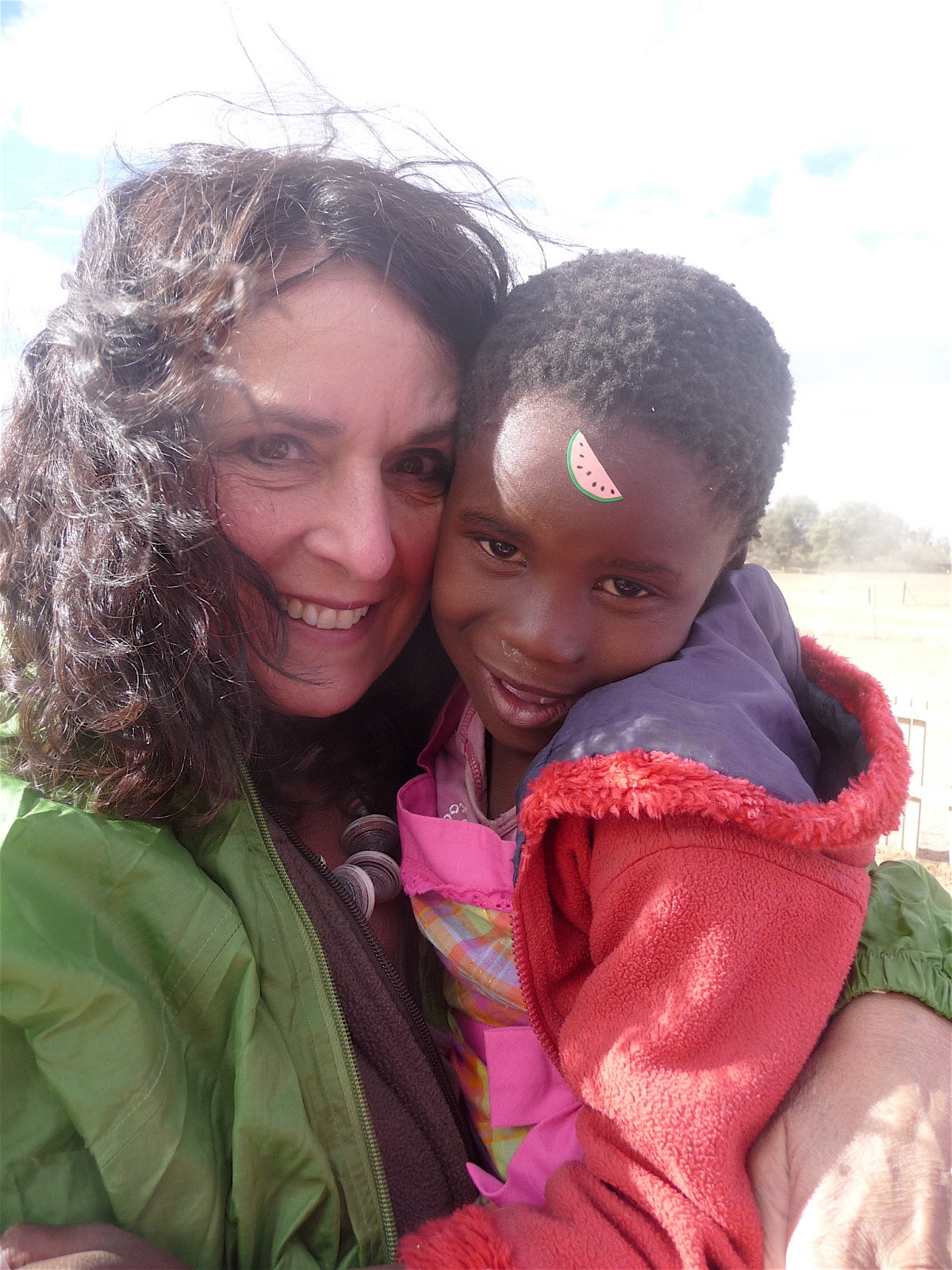
One thing that really stuck out to me were the people of Tija's NGO. If you think you know the nicest and most caring people ever, sorry to say it, but you're wrong. (Unless, of course, you know these women.) When I walked into the NGO, I saw a sea of smiling faces on some of the most beautiful kids I have ever seen. Then Tija says to us, "All of these kids are orphans, whose parents or guardians have passed away, mostly from AIDS." I felt my heart drop to the ground and break into a million pieces. All I wanted to do was take all 42 of those kids home with me but then, looking at the women of the NGO, I knew they were in good hands right where they were. They all got up and sang us songs and were insanely happy when we gave them stickers. They immediately began trading their stickers and putting them all over their faces. My mom had also brought a bunch of supplies for the women of the NGO and, at that moment, they were the happiest and most grateful people on earth. These women have dedicated their lives to helping these kids, teaching them, feeding them, and just making them happy.
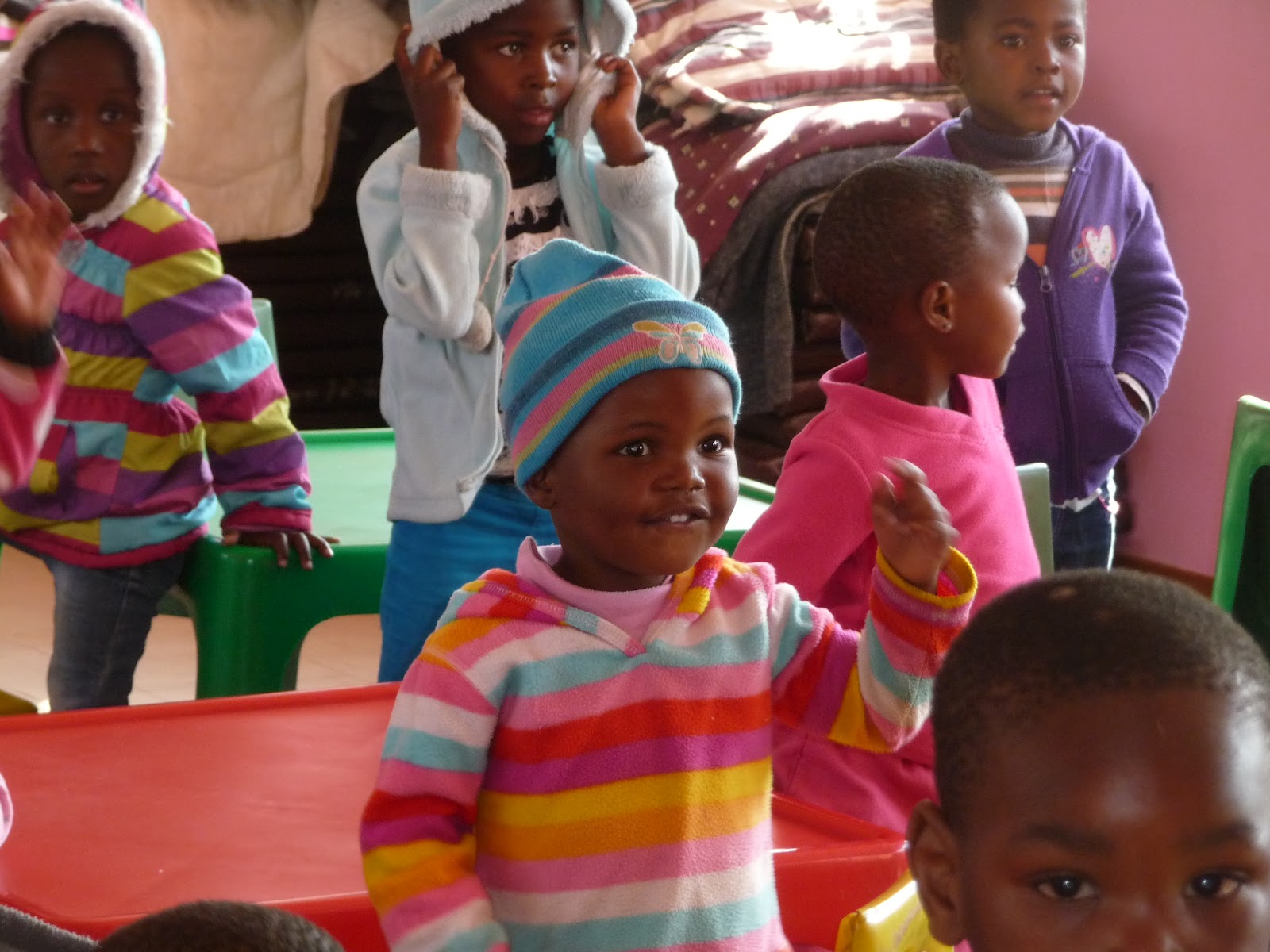 Thinking about the time we spent at the NGO, I can't even imagine seeing all those faces every day, knowing what those kids have been through. This is what my sister does every day, among many other things. She gets up, goes into the NGO, and puts a smile on every one of those kids' faces. I can't think of anything more heartbreaking to do on a daily basis, but I also can't think of anything more rewarding. She doesn't only bring happiness to those kids though; she's also built a family at the NGO with everyone that works there. From the women who run the NGO, all of the Volunteers, and to every single cook, she has established amazing relationships with everyone. Seeing that made me extremely happy because that meant when I left she still had people there that love her and treat her as their own family. I don't know how to put it into words but the feeling of knowing my sister has such a great group of people surrounding her made me feel MUCH better about her being half a world away.
On a much lighter note, I definitely want to mention the shower situation over in Botswana because that was a source of struggle for me. First of all, Tija has a geyser at her house that she has to turn on for two hours (during the winter) to warm enough water for a bath. This geyser works well enough to heat up about five inches deep of water in her tub. This means that to bathe, you have to basically lay down in the tub and pretty much splash water on yourself. The first day there, I was the second person to bathe. We let the geyser re-heat after the first bath for about 45 minutes. Lets just say it was less than awesome... it was cold, shallow, and NOT what I was used to at home at all.
 Then there's showering in the bush while on safari. This was done with a bucket of "hippo water" that was warmed up over a fire. At first I thought it was amazing because I was actually standing up and the water was warm. Unfortunately, after my shower, I smelled like hippo water.
Then there are the outdoor showers at the backpackers hostels. Those are not freezing but I wouldn't call them warm either. At least they're stand-up showers though, which I found out are not very common over there.
Then there's Tija's friend Jeremy. Jeremy walks to a water spicket in the middle of his village, fills up a bucket of water, and walks it back to his larger bucket at home and bathes in that. That's when I found out that Tija's five inches of warm water in a real tub were actually pretty amazing.
Finally, after six days in the bush, we arrived at a really cute chalet. They had stand-up showers with... HOT WATER! That was literally the best shower of my life and I don't think any shower will ever come close to beating that.
Going to Botswana was really the most amazing, crazy, eye-opening, and just all-around outrageous trip that I have ever and will ever go on. I commend Tija, and all the other Peace Corps Volunteers that are over there, for what they are doing. They are in a world completely different from what they have grown accustomed to and have turned Botswana into their homes, have grown to love their lives there no matter how little they have, and are helping change and better the lives of the Batswana that have become their neighbors, friends, and family.
Looking back, I really can't believe all that I saw and experiences and the genuine goodness of the people in Botswana. I loved every second of this trip (minus the day with the Baboon Spider in my tent) and am so happy knowing that Tija has made a real life over there. I truly believe what she's doing is actually making a difference in the lives of many people. I still can't wait for her to come home but at least now I have seen her world and that makes me feel like I'm not so far away anymore."

Tuesday, September 4, 2012
Every Day A Different Path

Friday, August 3, 2012
A Must Read
Have you ever heard that Africa, all of Africa, is impoverished and war-torn and underdeveloped and struggling? Have you even given this a second thought or wondered about the other side/complexity of such a huge continent? I am here to tell you that there are many dimensions to life here. That is part of my role as a Peace Corps Volunteer - to break down stereotypes and educate our respective nations about the other. We have a responsibility to share what we know. This is me doing that once more. Do yourself a favor (especially if you are an ex-patriot, a PCV, or a traveler of Africa) and click to read this article:
The White Correspondent’s Burden: We Need to Tell the Africa Story Differently
The White Correspondent’s Burden: We Need to Tell the Africa Story Differently
Tuesday, May 22, 2012
The World Needs You Now
I started following the work of the Acumen Fund nearly two years ago after reading its Founder and CEO's, Jacqueline Novogratz's, book The Blue Sweater. Her book inspired me. I have often thought about the story as I continue my work here and have used that memory as fuel to continue persevering, knowing that I am here for a greater purpose and that there is so much good to be done. Patience, dedication, passion, following your gut, trusting yourself, and the knowledge that we can all make a difference are the key morals I was left with.
In that same vein, I wanted to share this video, hoping that it would inspire each of you in the same way it has me. The video is of the commencement speech that Ms. Novogratz gave at Gettysburg College a few days ago. It has a message that we all need to hear and internalize. Please take a moment and watch - let her words resonate and encourage you. I truly believe that together we bridge the gap and create the kind of world we can be eternally proud to be a part of.
Thank you, President Riggs.
In that same vein, I wanted to share this video, hoping that it would inspire each of you in the same way it has me. The video is of the commencement speech that Ms. Novogratz gave at Gettysburg College a few days ago. It has a message that we all need to hear and internalize. Please take a moment and watch - let her words resonate and encourage you. I truly believe that together we bridge the gap and create the kind of world we can be eternally proud to be a part of.
Below is the full-text version of the speech
(since I know that viewing videos can be almost impossible
for those of us in the developing world - myself included)
Thank you, President Riggs.
David, you’re a hard act to follow. In the past 24 hours as I was listening to your classmates speak, I was thinking that I finally have a sense of what it means to be “Gettysburg Great.” I am so honored to be with you and so honored to be receiving this degree with Karl Mattson who’s such a wonderful person. And I am absolutely inspired to be here with the Class of 2012 as you graduate. I thank you, distinguished faculty, who care so much about the students, the staff, the team here, the alumni, the trustees who give so much, the proud parents and grandparents who love so much, the inspired siblings and friends – I could not thank you more.
You, the Graduates, have earned this moment… so no matter how exhausted or bleary eyed you might be feeling after last night’s celebrations, take a few seconds to look around at each other.
Look to your left...
and to your right…
and take this moment and feel it.
Because so often life rushes by us and we forget the most critical moments in our lives. It is so important to live the minutes even when the world is moving at breakneck pace.
So breathe it all in and know with your whole heart and body: You did it. You really did it. Congratulations.
I remember being your age like it was yesterday, full of an amazing mix of certainty and a rolling list of questions. There was the first job –if you could even find one – for like you, I also graduated in a time when the country was just coming out of a recession.
I dreamt of changing the world, and had worked hard to finance my college education so decided to take a year off before starting a career.
As you can imagine my parents thought that was a miserable idea, and yet, my parents are quite wise. So they negotiated with me that I should at least go through the college interviewing process. So I bought a suit, took my resume, and dutifully deposited it in the boxes for foreign affairs and economics majors.
My first interview was with Chase Manhattan bank. I walked into the interview, sat across the table from this handsome recruiter, and he asked me what would turn out to be the easiest and the hardest question.
He said, “So tell me, Ms. Novogratz, Why do you want to be a banker?” I’m a terrible liar, so I said, “Actually I don’t want to be a banker – my parents made me do this interview. I really want to change the world.” He said, “Well that’s just too bad – if you got this job, you would be in 40 countries in the next 3 years, learning all about the economics, the politics, the people of those places.” And the truth was, all I ever wanted to do up to that point was to know the world – to travel it and understand its people. And I was feeling this great opportunity flying away.
So I stared at him and I said, “Do you think we might do this interview over?” He said sure. I left the room, knocked on the door, walked in, extended my hand and introduced myself. He said again, “Tell me, Ms. Novogratz, why do you want to be a banker?” I said, “Ever since I was six years old, all I ever wanted to be was a banker.”
Shockingly, I got the job.
As it turned out, I loved being a banker. I loved how numbers could tell a story, and how smart investment could transform ideas into jobs and sometimes things of beauty.
What I didn’t like was that poor people were not in the mix. The banks felt it was too expensive, too difficult and too risky to lend to the poor. And low income people themselves were often too frightened to even walk into the bank’s doors.
Three years after starting, I decided to leave the bank and try something different to fill that need. I had read about Muhammad Yunus who had started making tiny loans to women in Bangladesh a decade earlier – and that inspired me to decide to move to Africa, ultimately, Rwanda, to try my own hand at banking for the poor.
Not surprisingly, it seemed I was the only one I could find who approved of the idea. My boss told me I was making the worst career decision of my life and gave me a book called the Innocent Anthropologist. My friends thought I had lost my mind. My little brothers and sisters said they would miss me too much.
Telling my parents, however, was the hardest. Now looking back at what they were going through, I understand. Their daughter, who had a promising career, was leaving Wall Street to move to a continent very few people understood. To a place they couldn’t find on a map. To do something they couldn’t explain to their friends.
But I knew somehow in my deepest being that I had to do it. And that if I didn’t go then, I might never have the guts to do it again. I also knew how fiercely I loved them and was connected to my family and that I ultimately would not let them down.
And so, with a mix of love, sadness and excited anticipation, I boarded a plane for Africa, and ended up in Rwanda, where I met a group of Rwandan women and together we started the country’s first microfinance bank. And there, I learned first-hand that a small group of people really can change the world.
I tell you these stories because there will be moments in your life when you have to make those hard decisions that can come only from listening to the deepest part of yourself. And you will certainly have those moments if you decide to venture out and do something few have done before.
Now, I don’t say any of this lightly. I know it comes at a price.
You will find that people might not always understand you. You might even close off certain relationships. But in paying that price, you’ll discover who you really are and who you want to be. You’ll discover what you are capable of doing.
And of course, that journey of change and of self-discovery comes with the high risk of falling flat on your face. Repeatedly. I have fallen down and gotten up more times than I can say. But as that American philosopher John Wayne once said, “Life is getting up one more time than you’ve been knocked down.”
We have become a society craving instant gratification. We want simple answers and clear pathways to success. But as you all know from the many community projects you’ve undertaken, from the very world around you – life doesn’t work that way. And instead of looking for answers all the time, my wish for you is that you get comfortable learning to ask the questions.
As the poet Rilke said: “try to love the questions themselves”, he wrote, “as if they were locked rooms or books writing in a very foreign language. Don’t search for the answers, which could not be given to you now, because you would not be able to live them. And the point is to live everything. Live the question now. Perhaps then, someday far in the future, you will gradually, without even noticing it, live your way into the answer.”
For me, one of the biggest questions we face today is how to build a world beyond poverty. To confront that challenge, both materially and spiritually, we need to renew and revitalize our systems of government and capitalism. Mostly, we need a new kind of leadership, one based in the notion of moral imagination, of building trust and solutions from the perspective of those being served.
Today’s world is more complex and interconnected than ever before. Think about it…
The wealthy live better than most kings and queens of history. At yet, 1.5 billion people – nearly 1 in 5 of us – have never had a glass of safe drinking water. They still light their tiny homes by kerosene, an energy source used mostly in the 19th century. And one in three of us have no access to a toilet.
In the words of my young nephew, that isn’t good for any of us.
Ultimately, this divide between rich and poor is too stark and too unsustainable. It strips not just the poor but all of us of our collective dignity.
And people your age all around the world know it. They see it. And they are calling in the streets for dignity.
The tectonic plates of society are quickly, dramatically shifting. You can hear them creaking, pushing – moving to fever pitch with the Arab Spring, clanging with dissonance of the financial crisis, the hope of the Occupy Movement. Planet Earth is swirling, full of possibility, yet somehow tumbling with confusion, seemingly not knowing which way is up.
And everywhere, everywhere, people are asking, “Where are our Leaders?”
From my work with Acumen, I am privileged to meet extraordinary individuals all around the world. They dare to dream and put their dreams into action. Usually they fail again and again – until they win, even if their dreams don’t look exactly like they did when they started out.
I think of Shaffi Mather who decided to fix the broken ambulance system in India. In India, if you want to go to a hospital, you call a taxi. If you want to send someone to the morgue, that’s when you call an ambulance. Shaffi decided there had to be a better way. He started with just 9 ambulances donated by friends and family, and everyone thought it was just a fool’s errand. Well today with patient capital invested, and hard work, and lots of bumps along the way, his company now has almost 1000 ambulances, 5000 employees, 1 million served this year. By the end of this year, he will be the fourth or fifth largest, ethical ambulance company in the world.
Shaffi saw something broken and decided to fix it. And if he can do it, so can you.
I think of a group of young leaders, just out of university, I met a week ago in Peshawar, in Northwestern Pakistan on the Afghanistan border. It is a place known mostly for burkas, for suicide bombers and for desperation, a place where many live in fear.
Yet I met young people there who want to see a different future – and they’re intent on creating it, despite the risks of speaking out, despite the risks of collective action. They used Facebook and other social media to get more than 4,000 people on to the streets of Peshawar to pick up the litter, whitewash the graffiti-laden walls, and clean up and green their city. They are not waiting around for political leaders to show them the way.
Like Shaffi, they are just doing it.
And they are just like you. They are your counterparts. They dream a better world. And they want to do something about it – even if they don’t know where to start, even if they don’t have the answers. Maybe mostly, they want to be seen. They want to know that their lives matter, that they can make a difference before they die. Just like I imagine each of you do.
I was so struck that some of you sent in notes to President Riggs who sent them on to me to help me prepare for today’s graduation – and I thank you for that generosity and for the words which so embodied the spirit of “Gettysburg Great.”
Nearly all of you mentioned Community. And learning. And the idea that you want to meet the challenges of the world in big and small ways. Just by reading those words of yours, l came to like you.
A lot.
In liking who you already are, I want even more for you to come to know the world, to love the world, and to be in closer touch with counterparts who are like you in so many ways even if those similarities are not immediately evident.
I think of a group of young men I know who live in the vast and sprawling slums of Nairobi, Kenya.
When my book came out, a guy named Kevin, HIV-positive with a 3rd grade formal education, read it. He wrote and then texted me a long review of the book, saying how much he related to me for he had failed just as I had failed and that he, too, wanted to bridge the gap between rich and poor.
I was so taken by this young man who lived on so little income in a shack in the slums that I told him I’d get him books if he wanted to start a reading club. He asked for 100, which I sent, and then he and a few other young men hosted a giant book club in the Kibera Slum to discuss poverty and the book. That lead the group to start a business plan competition. And then they decided to do the first TEDx in the slums. I know that you all recently held a memorable TEDx here, organized by Steve Meehan and others.
They didn’t have internet but it didn’t matter – they burned TED talks onto CD roms so they could include talks from around the world. They decided they were so tired of seeing only workshops about HIV and microfinance and tired of privileged Americans coming with their smiling faces intent on saving their communities, when in fact, no one was asking to be saved. So they pulled together the best journalists, graffiti artists, entrepreneurs, and teachers. It caught the attention of the TED organizers, and today, Kevin and his band of brothers have hosted more than 40 TEDx events across East African slums.
Just two days ago, Kevin sent me another long text, this time describing his experience on stage at Doha, Qatar, telling 750 organizers around the world what it takes to do a TEDx and spread ideas in slum communities.
All of us are needed to renew the world. Every single one of us.
Each of you, more than at any time in history, with the privilege of your Gettysburg degree has it in your hands to serve, to inspire, to work across boundaries to create the future you dare to dream. Your education at Gettysburg has taught you to be curious, to keep learning. The world needs you more than ever.
The good news is there are so many enormous opportunities for leadership. They are simply disguised as insoluble problems.
Think about the richness of a life focused on what it takes to bring clean energy to millions of people who otherwise would live in darkness. Or finding ways to use technology to crash through bureaucracy and get serious about educating all of our young people, whether they were born in an urban slum or a wealthy suburb.
Each of you is needed. Each of you has the chance to make a dent, if you have the curiosity, determination and focus to do so.
And if I have any wisdom to share, it is this.
1. Focus on being interested, not on being interesting. Don’t make decisions according to title or status or position. Pursue opportunities where you will learn about the world, and build the disciplines and practices you need to contribute. Follow incredible leaders. Focus more on listening and learning. The rest will come.
2. Don’t worry about what other people think of you. Most are too worried thinking about themselves. So take risks. Ask the dumb questions. Fail if you have to – and then get up and do it again.
3. Avoid cynicism. The poet Adrienne Rich wrote, “So much has been destroyed I have cast my lot with those who, age after age, perversely, with no extraordinary power, reconstitute the world.” The pessimists can tell us what is wrong with everything, but it is up to the optimists to dare to make the change.
4. Remember you are standing on strong shoulders. Daily, I’m astounded at how dependent we are on the work and ideas of so many who have come before. I’m not talking only about the greats of history. Before you’ve finished getting out of bed, turning on the light, brushing your teeth with water from a tap, putting on clothes making breakfast and walking out the door of your room, you are benefitting from hundreds if not thousands who have made those simple acts possible.
So walk with humility and a reverence for the human endeavor. Know it is your job to help take that forward in ways big and small.
And know you are incredibly blessed to have attended a school on the hallowed grounds made famous not only by a battle, but by a President whose quest for justice ensured that what happened there would not be forgotten.
“It is for us the living,” Abraham Lincoln wrote…”to be dedicated here to the unfinished work which they who fought here have thus far so nobly advanced. “ Of course, he was talking about human equality. It is to your generation to extend that fundamental assumption to every human being on the planet.
And if we can, we must. You will hold the spirit of Gettysburg always in your heart. And you will be a part of the school’s own legacy as well.
5. Finally, remember that inspiring hope in others may be the most radical thing you can do in a cynical world. Hope may not feed us, but it is hope that sustains us. I’m not talking about an easy, treacly hope, but a hope full of power and love, of grit and resilience. It is inside every single one of you. The path won’t be easy, but nothing of importance ever is.
So, Class of 2012, I congratulate you, I celebrate you, and now I’m going to challenge you…
I urge you to lead your life in the minutes, to live the questions, to walk out of this place and into the world with both arms extended and open to the experiences, good and bad, that life will hold for you…
The world needs you and I know you will not let it down.
I wish you good luck and Godspeed,
Thank you.

Subscribe to:
Posts (Atom)